Sunday, August 27, 2006
Beyond WSIS: Making a Difference Globally (2006)
A chapter within the new ITU/UNCTAD World Information Society Report 2006 focusing on WSIS implementation, including analysis based on the Stocktaking Database. The entire report is available here.

Wednesday, July 26, 2006
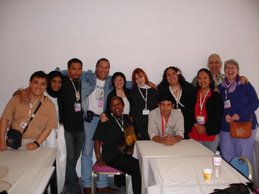
Interim Portal Board Meets in Geneva

A sub-group of the International Indigenous ICT Task Force, this interim working group will meet to plan and implement the International Indigenous Portal. Facilitaing this meeting is the International Committee for the Indians of the Americas (Incomindios), which is an organization founded by Native Americans and Swiss citizens with the declared goal of assisting the native peoples of North, Central and South America morally and materially in their struggle for political, economic and cultural sovereignty.
Visit Incomindios at http://www.incomindios.ch/english/indexenglish.html
Wednesday, June 21, 2006
GLOBAL ALLIANCE OUTLINES WORK TO SOLVE INFORMATION TECHNOLOGY NEEDS OF THE POOR
After two days of meetings in Malaysia involving over 700 experts from around the world, the United Nations initiative to foster information and communication technologies (ICT) in developing countries has established a framework for their activities.
The Global Alliance for Information and Communication Technologies and Development adopted Tuesday the Kuala Lumpur Vision, outlining the principles of the Alliance’s future work.
Pledging to overcome the social and digital divides between developed and developing world, the Vision promotes policies and partnerships that can help create an “arc of digital opportunity.”
“The irony of the present situation is that those who are currently with the least access to technology are precisely the ones who would benefit the most if wonders of modern information and communication technologies become indeed accessible and relevant to all of humanity,” the document says.
“We must think big while remaining solidly rooted in the real needs of real people, communities and countries (and) put the problems and needs of the majority of humanity onto the ‘radar screens’ of thinkers, business executives and government decision-makers,” it states.
Proposed initiatives include creating a Cyber Development Corps, establishing resource centers to boost human capital, and setting up networks and working groups to promote outreach and partnership for action.
Launched on Monday in Kuala Lumpur by Malaysia’s Prime Minister Abdullah Ahmad Badawi and Deputy Secretary-General Mark Malloch Brown, the Alliance aims to strengthen collaborations between the public and private sectors, expanding and replicating best practices and promoting solutions for early harvest.
The Alliance’s next move will be to establish a business plan. “We received a tremendous response from all continents and regions,” said Sarbuland Khan, Executive Coordinator of the Alliance’s Secretariat. “Ideas and objectives have now been put on the table, but need to be translated into meaningful action,” he added.
Tuesday, June 20, 2006
Inaugural Meeting of the Global Alliance for ICT and Development
Inaugural Meeting
Kuala Lumpur, 19-20 June 2006
Hosted by the Government of Malaysia
In a follow up to the recent decision of the Secretary-General (see press release), the inaugural meeting of the Global Alliance for ICT and Development was held on 19-20 June 2006 in Kuala Lumpur, Malaysia following a generous invitation by the Government of Malaysia.
Subscribe to:
Posts (Atom)